Sherwani vs Prince Coat: Which One Should You Rent for Your Wedding? In This Article 01Sherwani vs Prince Coat: The Real Difference 02Sherwani or Prince Coat: Which Suits Which Function 03Sherwani vs Prince Coat: Comfort and Movement 04Sherwani vs Prince Coat: Which Looks Better in Photos 05Sherwani vs Prince Coat: Which Suits More Body Types […]
Every groom hits the same moment while planning his wedding wardrobe. Sherwani or prince coat? Both look sharp. Both are traditional enough for a Pakistani wedding, and both show up constantly on Instagram and in bridal magazines. But they are not the same outfit, and picking the wrong one for the wrong function can leave you overdressed, uncomfortable, or just not quite feeling like yourself on the day. This guide breaks down the real differences so you can pick the one that actually fits your event, your body, and your personal style.
Sherwani vs Prince Coat: The Real Difference
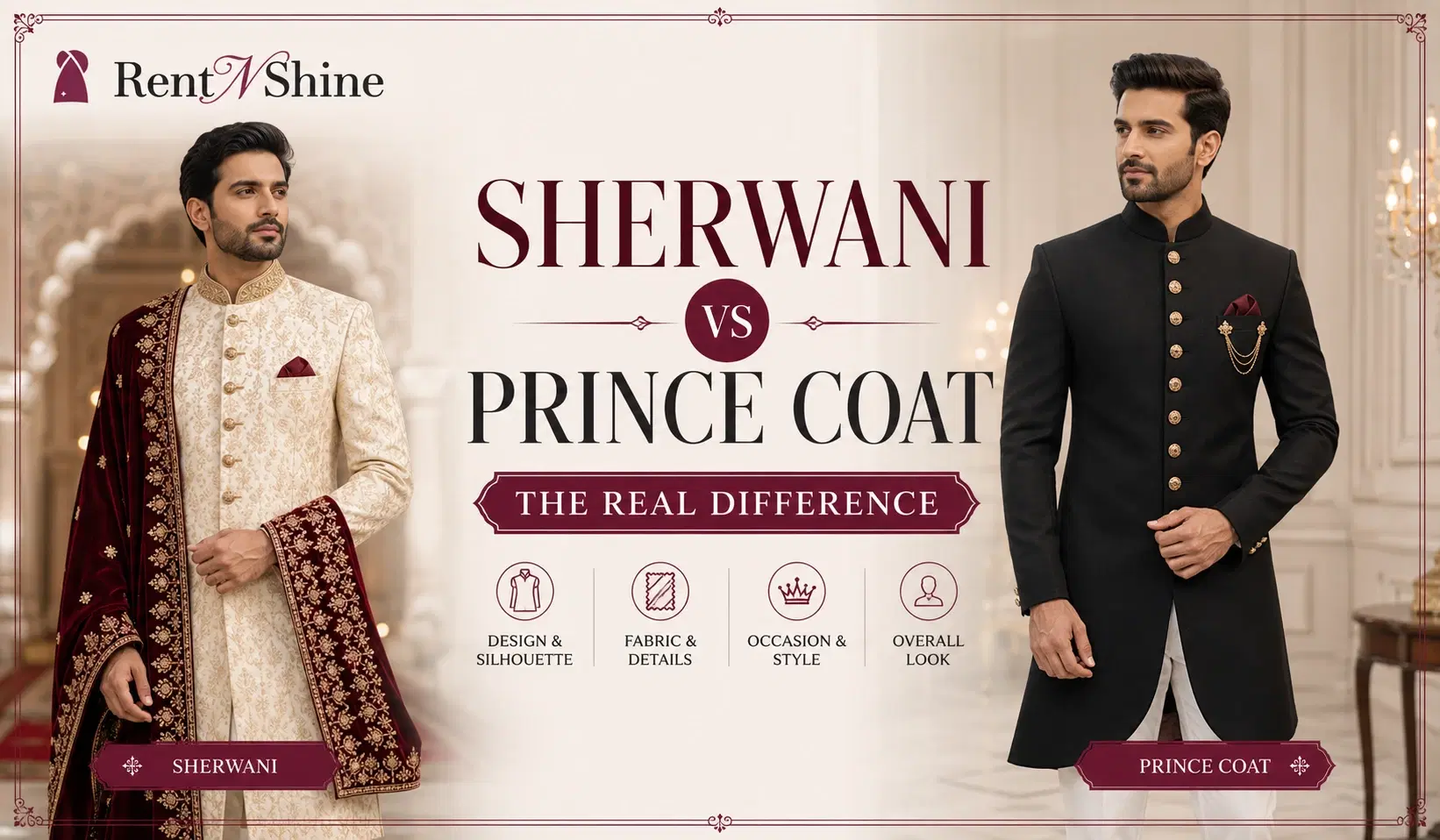
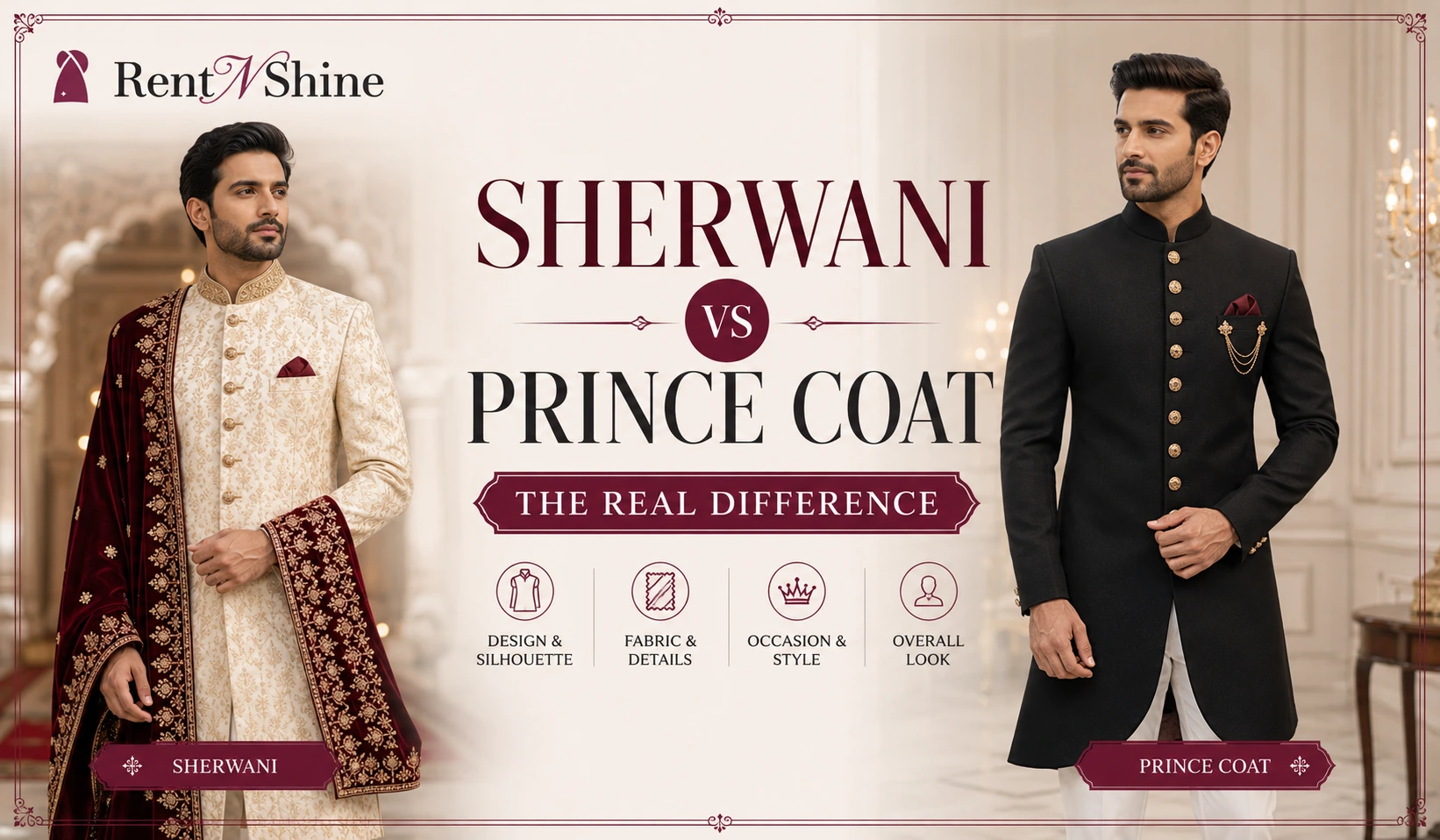
A sherwani is a long, coat-like garment that usually falls below the knee, worn over a kurta and paired with matching trousers or a churidar. It is heavily associated with tradition, and most sherwanis carry some level of embroidery, threadwork, or embellishment across the collar and chest panel. This is the outfit people picture when they imagine a groom walking onto the baraat stage.
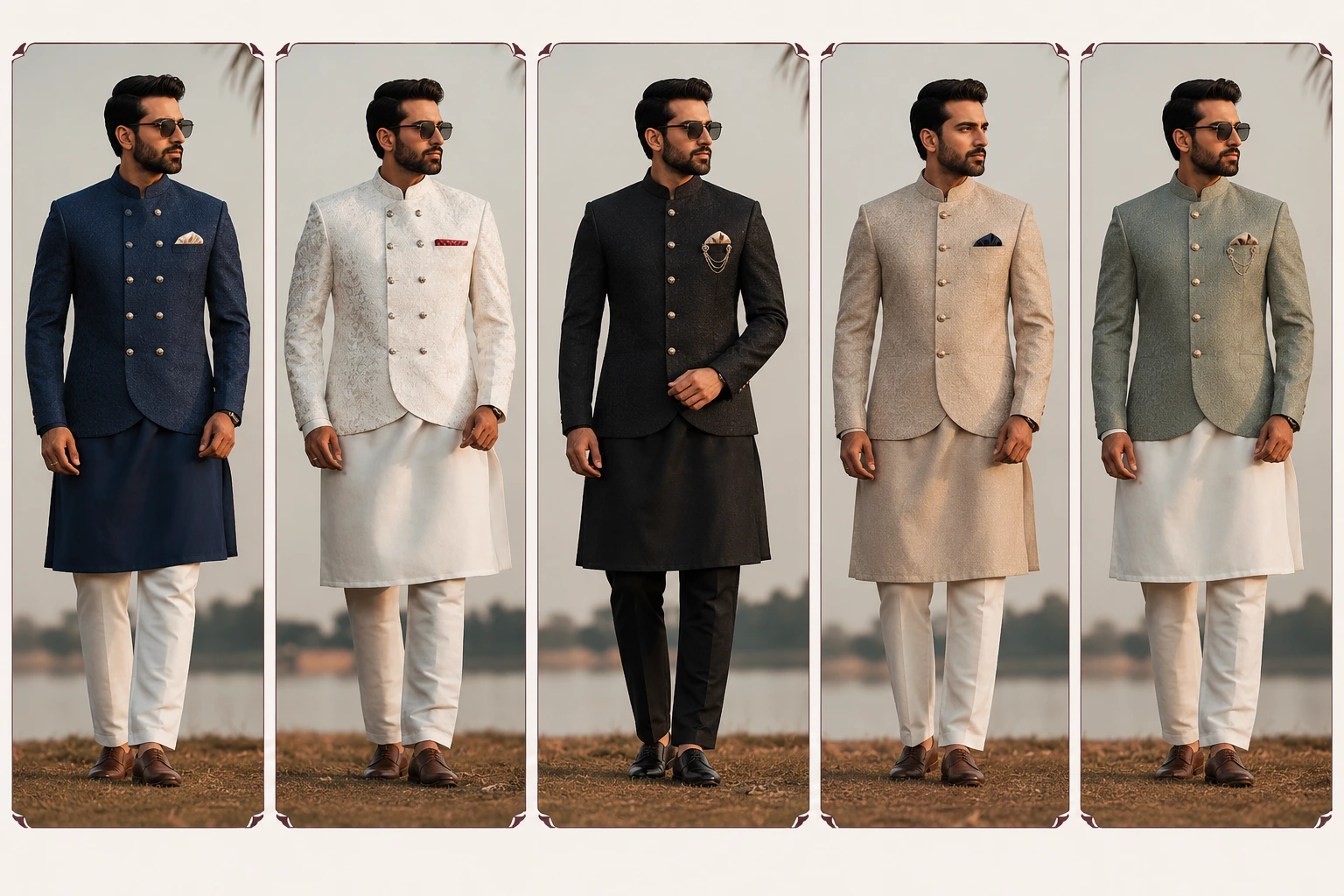
A prince coat is shorter, usually falling around hip length, with a more fitted, structured silhouette closer to a Western blazer or bandhgala jacket. It tends to carry less embroidery and leans on clean tailoring instead of embellishment to make its statement. Where a sherwani says tradition, a prince coat says modern and sharp.
Neither one is more formal than the other. They simply carry a different kind of formality. A sherwani feels ceremonial. A prince coat feels tailored and contemporary.
Sherwani or Prince Coat: Which Suits Which Function
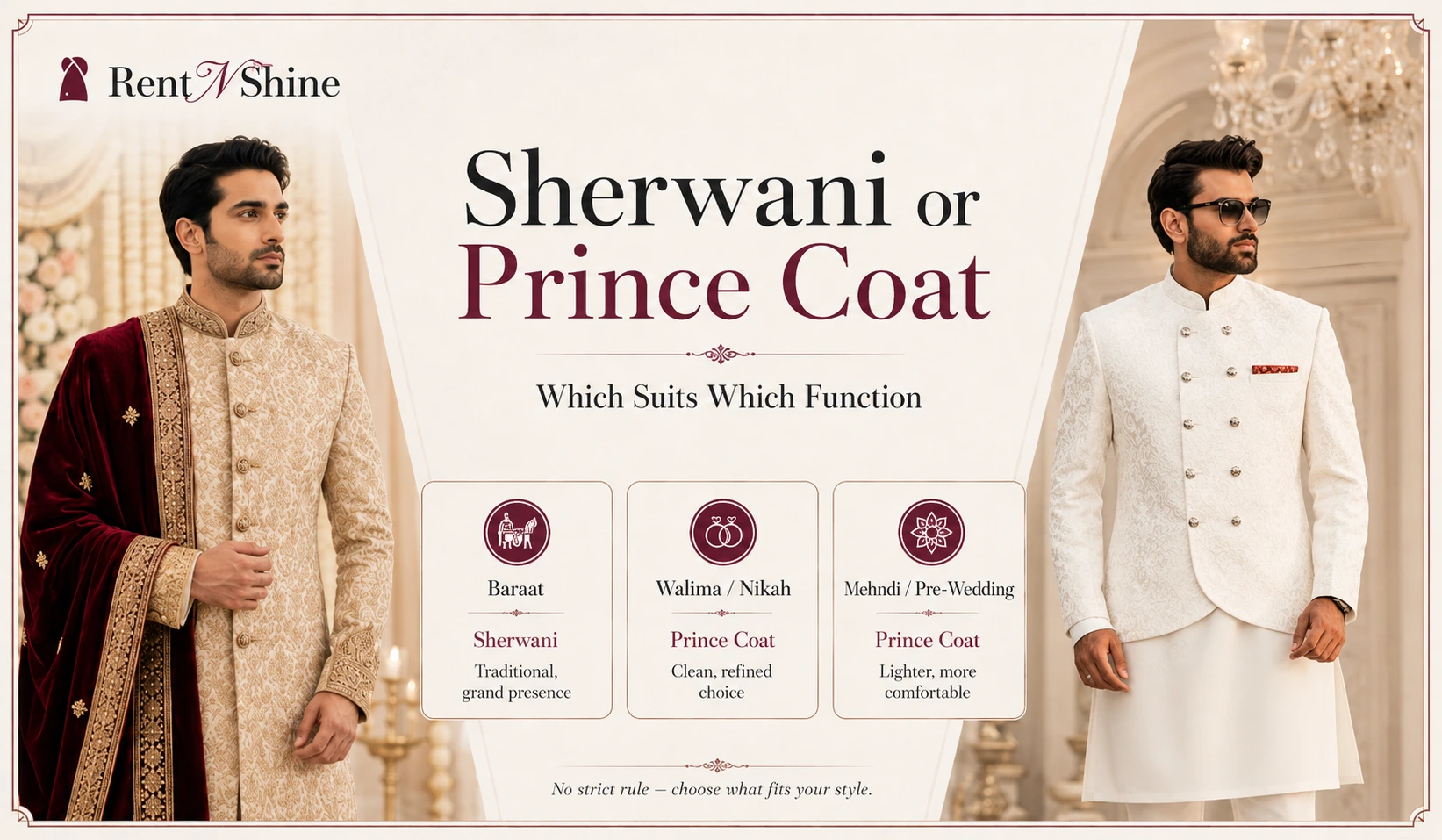
Sherwani Is the Traditional Choice
The baraat is the moment for maximum presence, and a heavily worked sherwani is built for exactly that. It reads as the main event outfit, which is what this function calls for.
Prince Coat Often Works Better
These functions tend to feel slightly less ceremonial and more personal. A prince coat’s cleaner silhouette fits that tone well, especially for a daytime or smaller gathering.
Prince Coat for Comfort
Mehndi functions often involve more movement and less formality. A prince coat, being shorter and lighter, tends to be the more practical pick here.
None of this is a strict rule. Plenty of grooms wear a prince coat for the baraat if that is more their style, and plenty choose a lighter sherwani for the walima. The point is knowing what each outfit naturally communicates so you can decide on purpose rather than by default. If your wedding also includes other formal events, our complete guide to formal dress rental in Pakistan covers what to wear beyond the main ceremonies.
Sherwani vs Prince Coat: Comfort and Movement
Weddings in Pakistan are long days. You are standing, greeting guests, taking photos, and moving around far more than you expect. This is where the difference between the two outfits becomes very real.
A sherwani, especially a heavily embroidered one, is a warmer and heavier garment. The length and the layered embroidery can make it feel restrictive after a few hours, particularly at an outdoor or summer event. A prince coat, being shorter and lighter, generally allows for easier movement and stays more comfortable across a long day.
If your wedding falls during Pakistan’s warmer months, comfort is worth weighing seriously against tradition. A lighter prince coat can look just as sharp in photos while saving you from sweating through a heavy embroidered sherwani by the second half of the event.
Sherwani vs Prince Coat: Which Looks Better in Photos
This one genuinely depends on the shot. A sherwani photographs beautifully in wide shots, especially on a stage or during the baraat entrance, because the length and embroidery add visual weight and presence from a distance. It is built to be seen across a room.
A prince coat photographs especially well in closer, more candid shots. The fitted silhouette holds its shape cleanly, and the simpler design means the detail that does exist, like the collar, buttons, or fabric texture, actually stands out instead of getting lost in embellishment.
If your wedding photography leans toward big stage shots and formal portraits, a sherwani tends to carry more visual impact. If it leans toward candid, editorial-style shots, a prince coat often reads as more polished.
Sherwani vs Prince Coat: Which Suits More Body Types
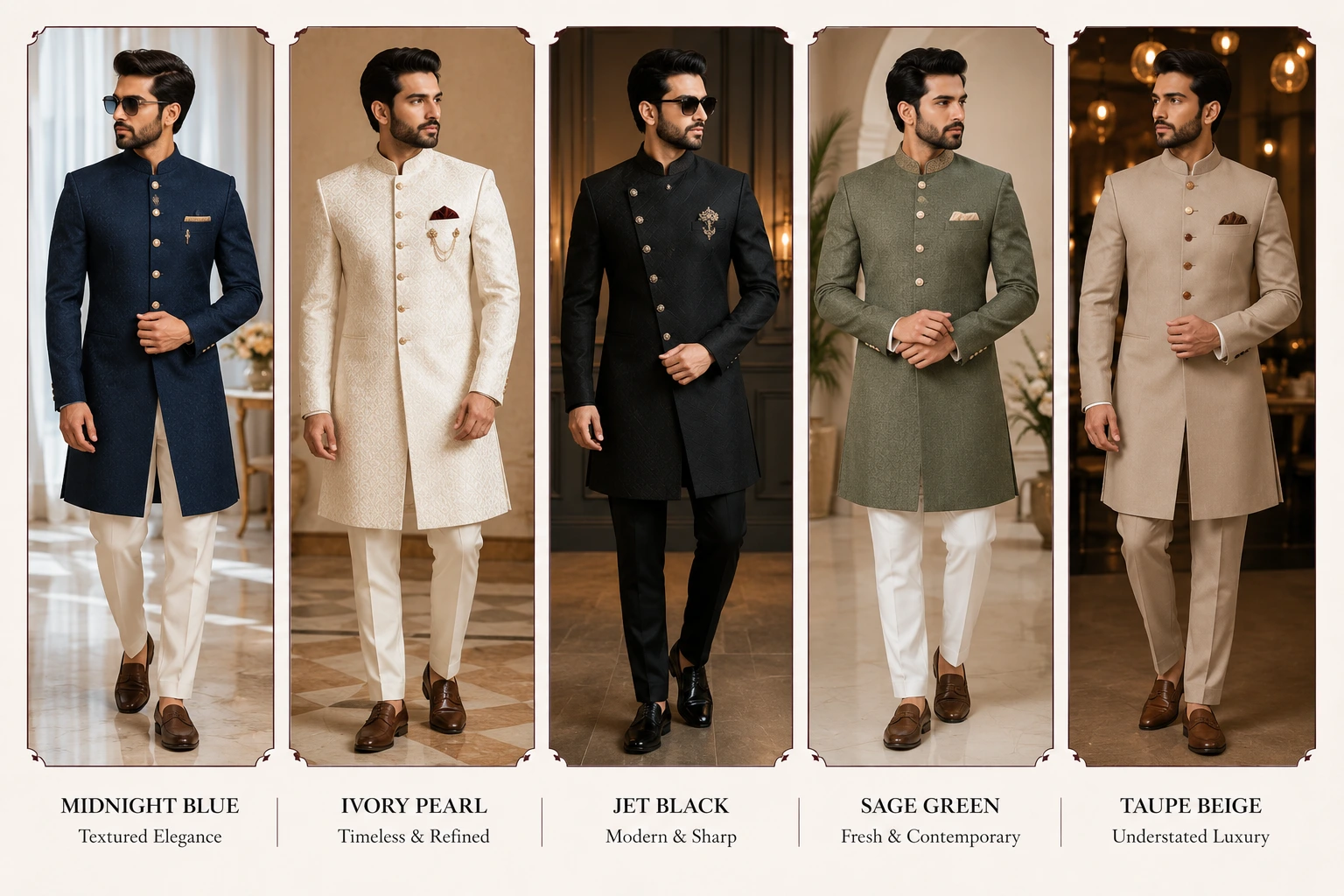
A sherwani’s length works in your favour if you are taller, since it elongates the silhouette without overwhelming the frame. On a shorter groom, a full-length sherwani can sometimes shorten the overall look, though a well-tailored fit and correct trouser length help balance this.
A prince coat tends to be more forgiving across different heights and builds, since the shorter length and fitted cut create a defined silhouette regardless of how tall you are. For grooms who are unsure which style suits their frame, a prince coat is generally the safer starting point.
Fit matters more than either style choice on its own. A sherwani that fits poorly will look worse than a well-tailored prince coat, and the reverse is just as true.
Renting a Sherwani vs a Prince Coat
Both outfits are available to rent, and the process works the same way for either one. You browse the groom collection on RentNShine, filter by style, size, and city, check availability for your wedding dates, and book. What differs is what you should actually check before choosing.
Check the embroidery condition closely
Heavy embroidery shows wear more visibly than plain fabric. Look closely at listing photos for any loose threadwork or discoloration before booking.
Pay extra attention to the shoulder fit
Since the silhouette is more fitted, a prince coat that doesn’t sit right on the shoulders is far more noticeable than a slightly loose sherwani would be.
Our full breakdown of the sherwani rental process in Pakistan covers measurements, booking timelines, and what to expect on delivery in more detail if you decide the sherwani is the right pick for you.
Sherwani or Prince Coat: How to Choose
You want a traditional, ceremonial look for your baraat, you’re comfortable in heavier fabric for a few hours, and you want maximum visual presence on stage.
You prefer a cleaner, more modern silhouette, you value comfort and ease of movement, or your event is smaller and less ceremonial in tone, like a nikah or walima.
And if you genuinely can’t decide, you don’t have to. Renting means you can book a sherwani for your baraat and a prince coat for your walima without paying for two outfits you will only wear once each. That is really the advantage renting gives you over buying either one outright.
Frequently Asked Questions
Is a sherwani more formal than a prince coat?
Can I wear a prince coat for my baraat instead of a sherwani?
Which one is more comfortable to wear for a full wedding day?
Do I need different outfits for the baraat, walima, and nikah?
Can I rent both a sherwani and a prince coat for the same wedding?
The right outfit is the one that fits your event and feels like you, whether that means heavy embroidery on a stage or a clean tailored coat at a smaller gathering.
Find Your Wedding Outfit
Browse sherwanis, prince coats, and the full groom collection available to rent across Pakistan right now.
Browse the Groom Collection"Sustainability in fashion isn't a trend; it's a responsibility. Every rented lehenga tells a story of a thousand celebrations."