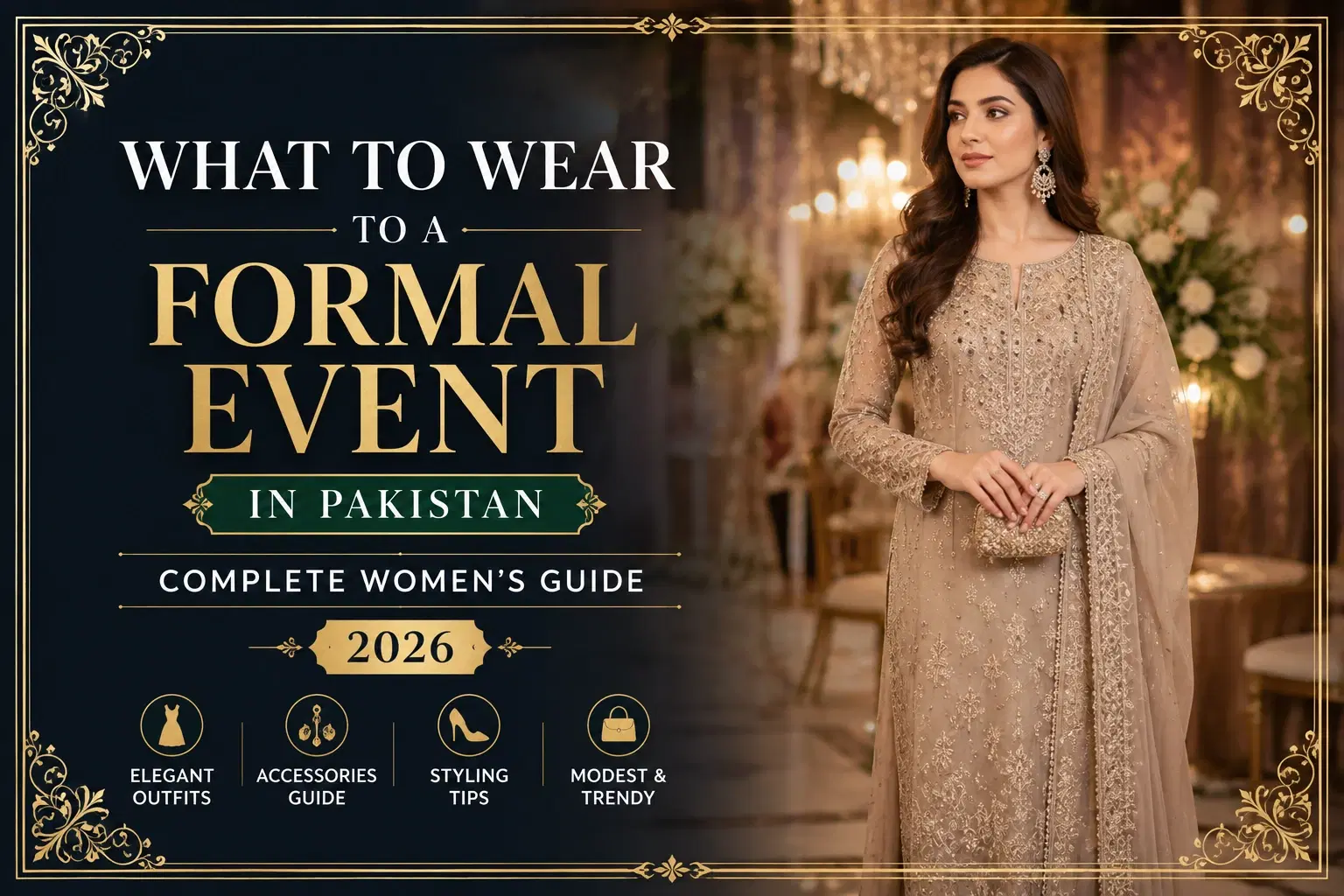
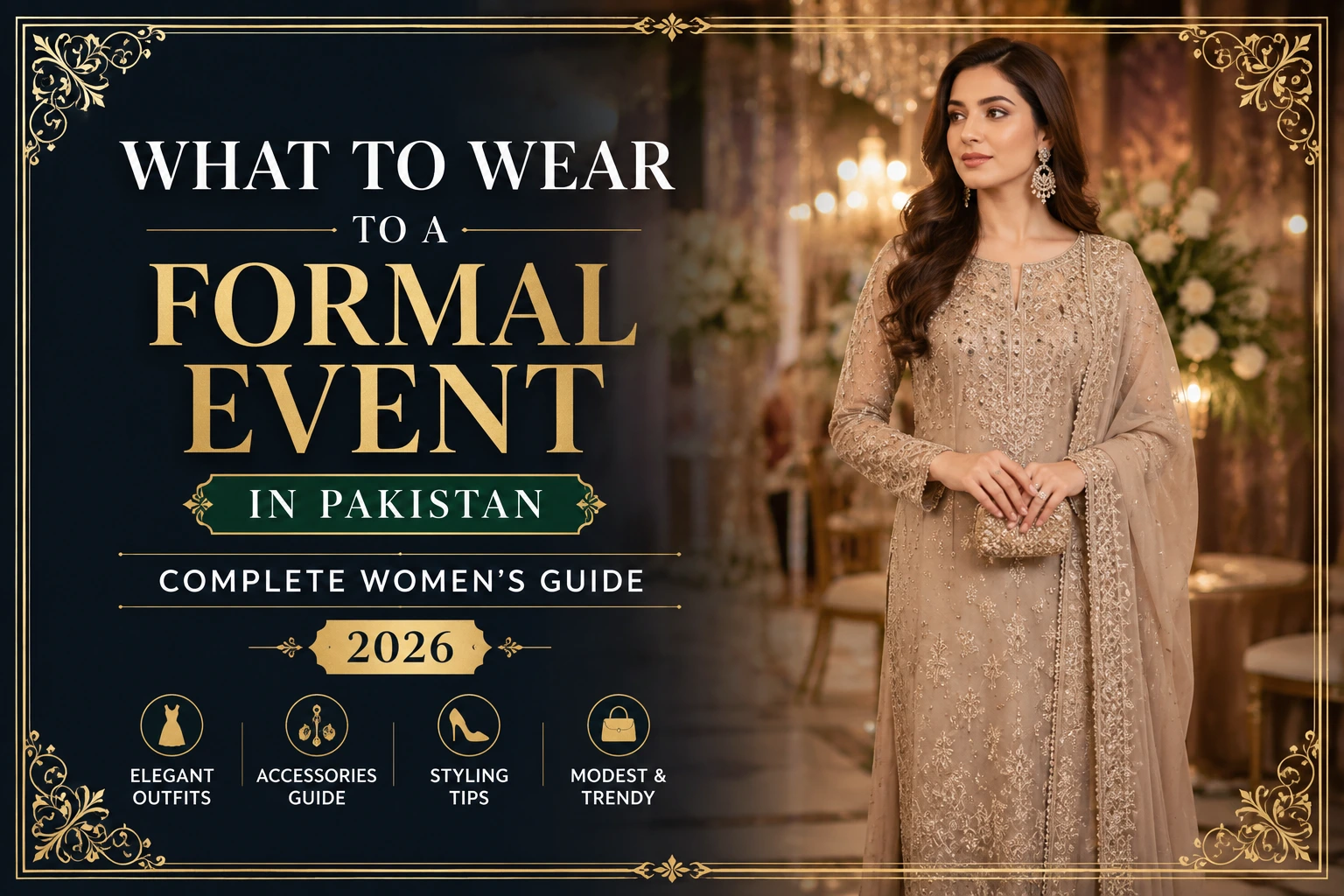
What to Wear to a Formal Event in Pakistan: Complete Women’s Guide 2026 | RentNShine RentNShine Journal — Women’s Formal Wear Guide 2026 “There’s no such thing as one ‘formal’ look in Pakistan — there’s the formal that fits the room, and the formal that fights it.” — common wisdom among Lahore’s event stylists If […]
“There’s no such thing as one ‘formal’ look in Pakistan — there’s the formal that fits the room, and the formal that fights it.” — common wisdom among Lahore’s event stylists
If you’ve ever stood in front of your closet re-reading an invitation that just says “formal attire,” you already know the problem. Figuring out what to wear to a formal event in Pakistan isn’t really about owning enough clothes — it’s about knowing which of your options actually matches the specific occasion, city, venue, and guest list you’re walking into. A “formal” wedding reception, a “formal” embassy dinner, and a “formal” corporate gala can call for three completely different outfits, even though the invite uses the exact same word.
This guide breaks that down properly: what “formal” actually means across Pakistan’s most common event types, which outfit categories cover each one, how fabric and color choices shift with the season, and the small styling details that separate a look that photographs well from one that just looks correct on paper. By the end, you’ll have a clear answer for any invite that lands in your inbox this year.
01What Does “Formal” Actually Mean in Pakistan?
Unlike Western dress codes, which are fairly standardized (black tie, cocktail, business formal), Pakistani formal dressing blends two wardrobes at once — Eastern and Western — and the word “formal” can point to either, depending entirely on context. A corporate award night and a walima both technically call for “formal wear,” but one expects a tailored gown or pantsuit while the other expects a heavily finished Eastern set. The single most useful skill in dressing for any Pakistani event is learning to read past the word on the invitation and toward the actual event type underneath it.
Formal vs. Semi-Formal vs. Smart Casual
Formal dressing calls for structured, well-finished pieces — think tailored Anarkalis, gowns, or heavily worked sarees. Semi-formal sits a notch below: clean kurta sets, simpler sarees, or cocktail dresses with lighter embellishment. Smart casual is the most relaxed of the three, allowing co-ord sets or lightly embroidered lawn suits. Most confusion happens when people treat these three as interchangeable, when in practice each one signals a different level of effort the host is expecting.
Daytime Formal vs. Evening Formal
Daytime formal events — engagement brunches, daytime corporate functions — lean toward lighter fabrics and softer, pastel tones. Evening formal events call for richer fabrics like silk, velvet, or organza, in deeper jewel tones, with more room for embellishment and shine. Getting this distinction wrong is one of the most common formal-wear mistakes: a daytime pastel look can feel underwhelming at a candle-lit evening gala, while a heavily sequinned evening piece can feel overdressed under daylight.
02Formal Outfit Categories Every Woman Should Know
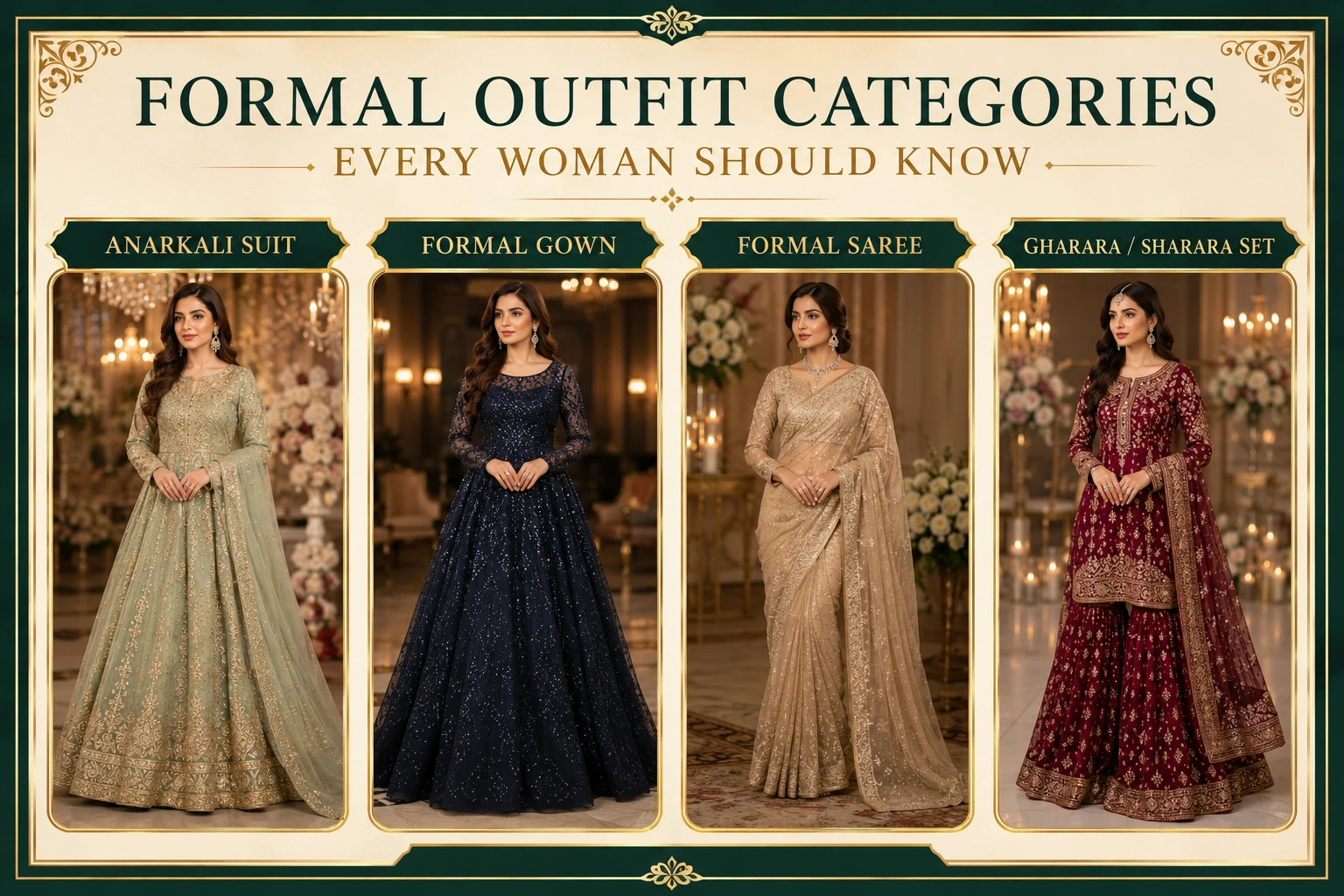
Once you understand the type of formality an event calls for, the next step is matching it to the right outfit category. Pakistan’s formal wardrobe options generally fall into four broad categories, each suited to a different register of event.
A flowing, floor-grazing silhouette that reads as elegant without feeling overly traditional — one of the most versatile formal picks for weddings, corporate dinners, and festive gatherings alike.
A Western silhouette best suited to black-tie galas, diplomatic functions, and corporate award nights where a more international formal register is expected.
The most traditionally elegant option, ideal for wedding functions and family events where Eastern formality is preferred or expected.
A structured, festive silhouette rooted in Mughal-era tailoring — a strong choice for weddings, mehndis, and heavily celebratory functions.
For a deeper breakdown of how these three main categories compare directly against each other, see our dedicated guide: Formal Saree vs Gown vs Maxi: Which Rental Suits Your Event Best?
03What to Wear, by Event Type
Tap through the most common formal occasions below to see exactly what to reach for.
Wedding / Walima
The most formal, most celebratory register in Pakistani dressing.
A heavily finished Anarkali, gharara, or formal saree with rich embroidery is the safest and most appropriate choice. Deeper jewel tones and gold detailing work especially well for evening walima functions.
Rent from the Formal Collection →Corporate Dinner / Gala
Polished and professional, with room for glamour at the black-tie end.
A tailored pantsuit, structured Anarkali, or floor-length gown depending on the exact formality level. For a full dress-code breakdown, see our corporate dress code guide.
Rent from the Formal Collection →Embassy / Diplomatic Event
Understated elegance over spectacle — modest, solid-toned, and well-tailored.
A floor-length gown or a modestly finished formal Eastern outfit in a rich, solid tone. Our embassy dress guide for Islamabad covers this in full detail.
Rent Formal Gowns →Eid / Festive Gathering
Festive, colorful, and celebratory, with slightly more room for embellishment.
A festive Anarkali or lightly embellished formal set in soft pastels or celebratory jewel tones works beautifully for Eid gatherings and family functions.
Rent from the Formal Collection →04Choosing Fabric & Color by Season
Pakistan’s climate plays a bigger role in formal dressing than most people account for. A heavily embellished velvet gharara might look stunning in photographs, but it becomes genuinely uncomfortable at a summer daytime function in Karachi or Lahore. Matching fabric weight to the season is just as important as matching the outfit to the occasion.
| Season | Recommended Fabrics | Colors to Favor |
|---|---|---|
| Summer | Chiffon, organza, lightweight silk, cotton-net | Soft pastels, whites, light corals |
| Winter | Velvet, raw silk, heavier jamawar | Deep jewel tones, maroon, emerald, navy |
| Monsoon / Humid Evenings | Crepe, light georgette | Muted tones that resist visible creasing |
2026 Color Trends Worth Knowing
This year’s formal palette leans toward calm, rich tones rather than loud, high-contrast combinations. Soft pastels are trending for daytime formal events, while deep jewel shades — emerald, maroon, and navy — dominate evening formal wear. For a closer look at where the broader silhouette and embellishment trends are heading, read our guide on 2026 formal wear trends in Pakistan.
05Accessories & Finishing Touches
The outfit does most of the work, but a few finishing choices determine whether a formal look feels complete or unfinished. Keep jewelry proportionate to the outfit’s embellishment level — a heavily worked Anarkali needs only minimal jewelry, while a simpler formal saree can carry a statement necklace or earrings well. Footwear should match the formality register too: delicate heels for Eastern formal wear, structured heels or flats for Western gowns depending on the venue’s terrain. A well-chosen clutch or potli rounds out the look without competing with the outfit itself.
06Common Mistakes to Avoid
Matching the word, not the event
Treating every invite that says “formal” the same way, instead of reading the actual event type underneath it.
Ignoring the season
Choosing a heavy velvet or jamawar piece for a summer daytime event, or a light chiffon for a chilly evening function.
07Frequently Asked Questions
Formal wear for women in Pakistan typically includes Anarkali suits, formal gowns, sarees, and gharara or sharara sets made from richer fabrics like silk, organza, or chiffon, often finished with embroidery or embellishment. The exact level of formality depends on the event, ranging from smart formal office wear to heavily embellished wedding and gala outfits.
When a dress code isn’t specified, a well-tailored Anarkali suit or a knee-to-midi length dress in a solid, rich tone is a safe default. It reads as appropriately formal without being over- or under-dressed for most Pakistani events.
Yes, Western formal dresses and gowns are widely accepted at corporate events, diplomatic functions, galas, and increasingly at wedding-adjacent parties in major Pakistani cities. For strictly traditional family functions, Eastern formal wear is still generally preferred.
2026 formal wear trends favor soft pastels for daytime events and rich jewel tones like emerald, maroon, and navy for evening formal occasions, paired with cleaner silhouettes and more minimal embroidery than previous years.
Renting is generally far more cost-effective for one-time or infrequent formal events, since it avoids the full retail cost of a piece that may only be worn once, while still allowing access to well-finished, current-season outfits. See our price breakdown by city for specifics.
"Sustainability in fashion isn't a trend; it's a responsibility. Every rented lehenga tells a story of a thousand celebrations."