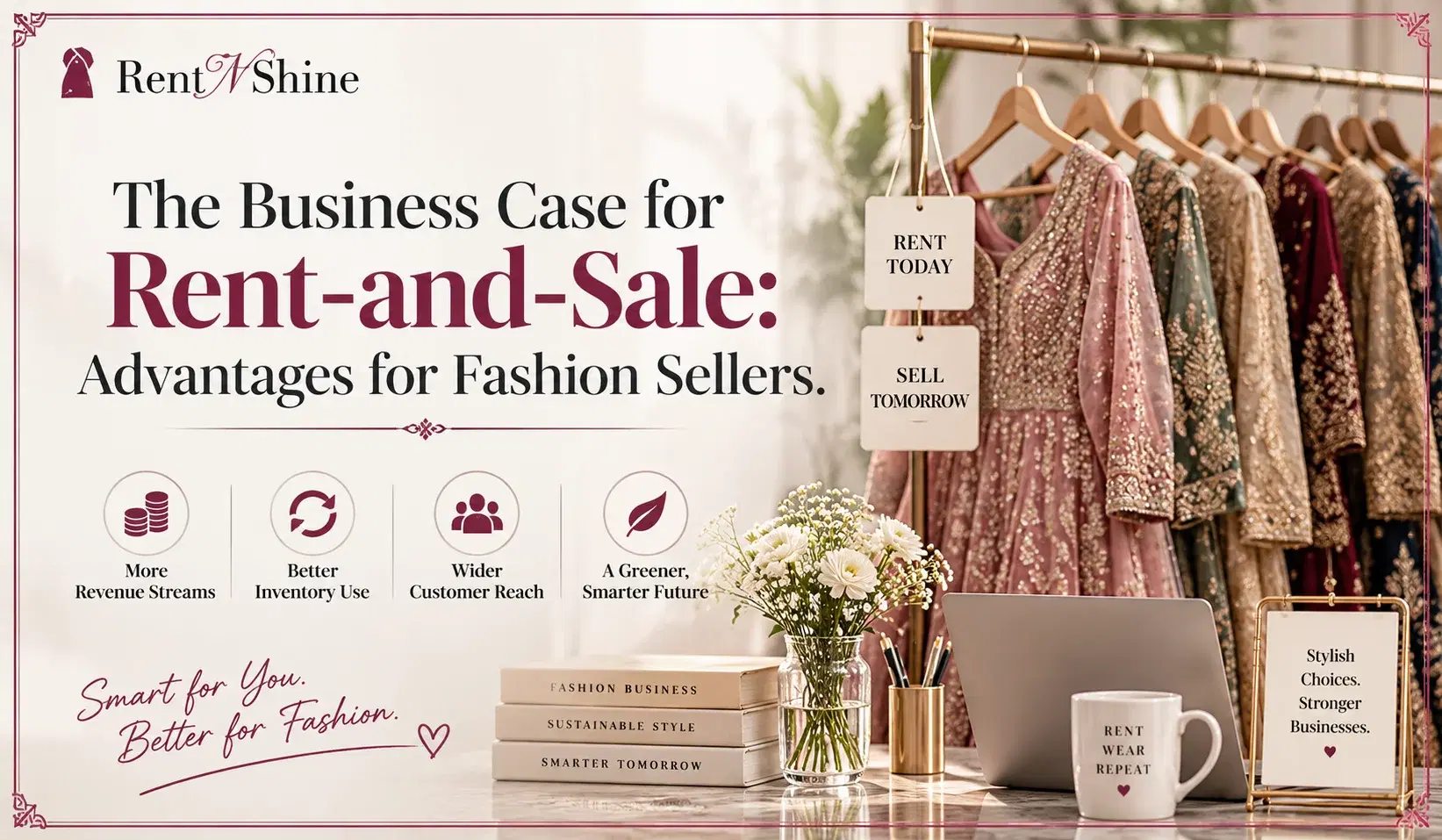
A rent and sale business model turns idle stock into steady income. See the real business advantages fashion sellers gain, from lower inventory risk to customers who keep coming back.
Somewhere in your storeroom is an outfit that cost you real money and hasn’t earned you a single rupee in months.
— the problem almost every fashion seller quietly deals with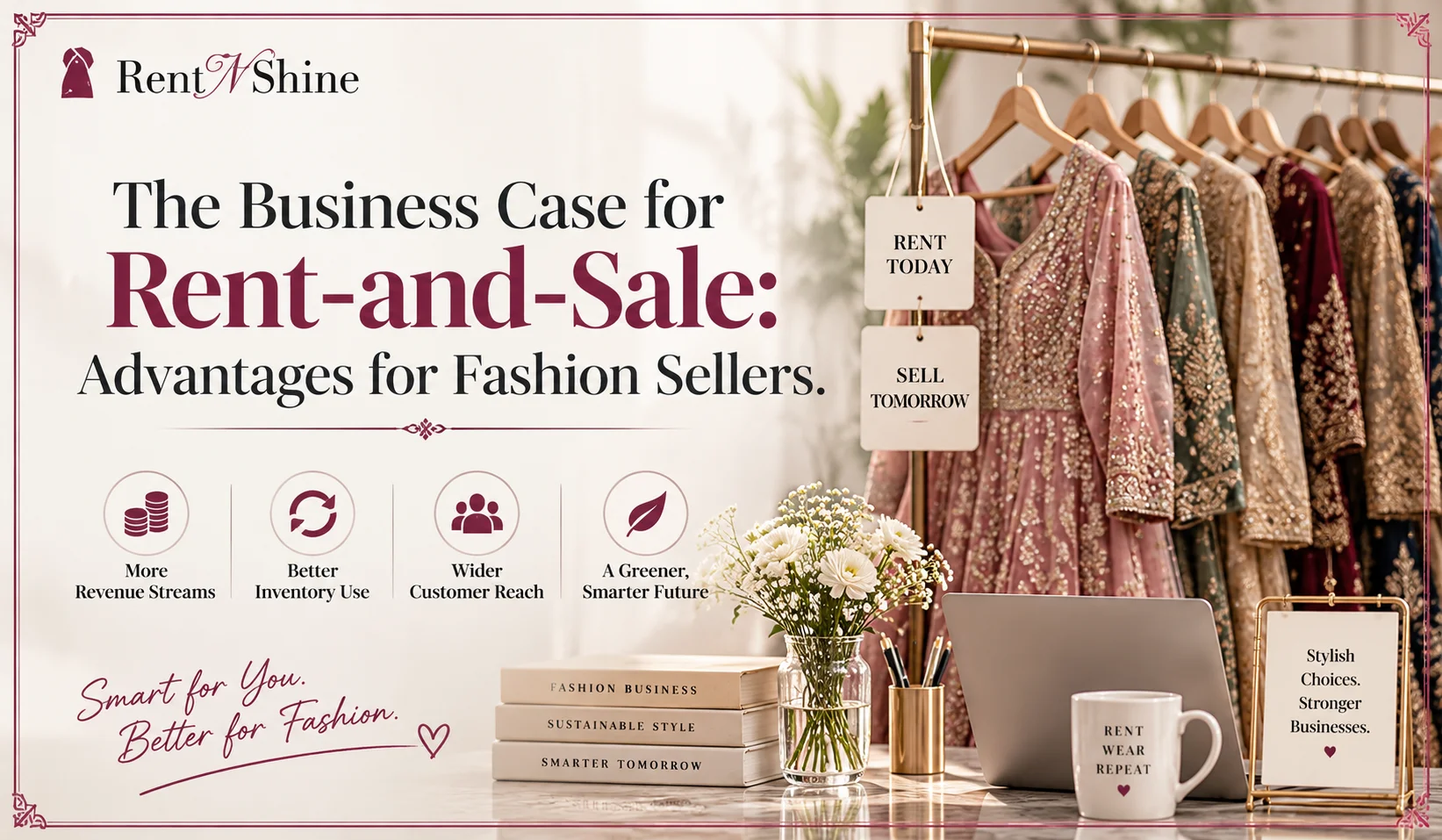
If you run a fashion label, boutique, or even just sell out of your own wardrobe, you already know the frustrating part isn’t making beautiful clothes. It’s what happens after someone buys one outfit and never comes back for six months, while the rest of your stock just sits there depreciating on a hanger. A rent-and-sale model doesn’t fix that by working harder. It fixes it by giving the same outfit more than one way to earn for you. Here’s what that actually looks like, and why more sellers in Pakistan’s fashion space are moving toward it.
The Problem With Selling Only
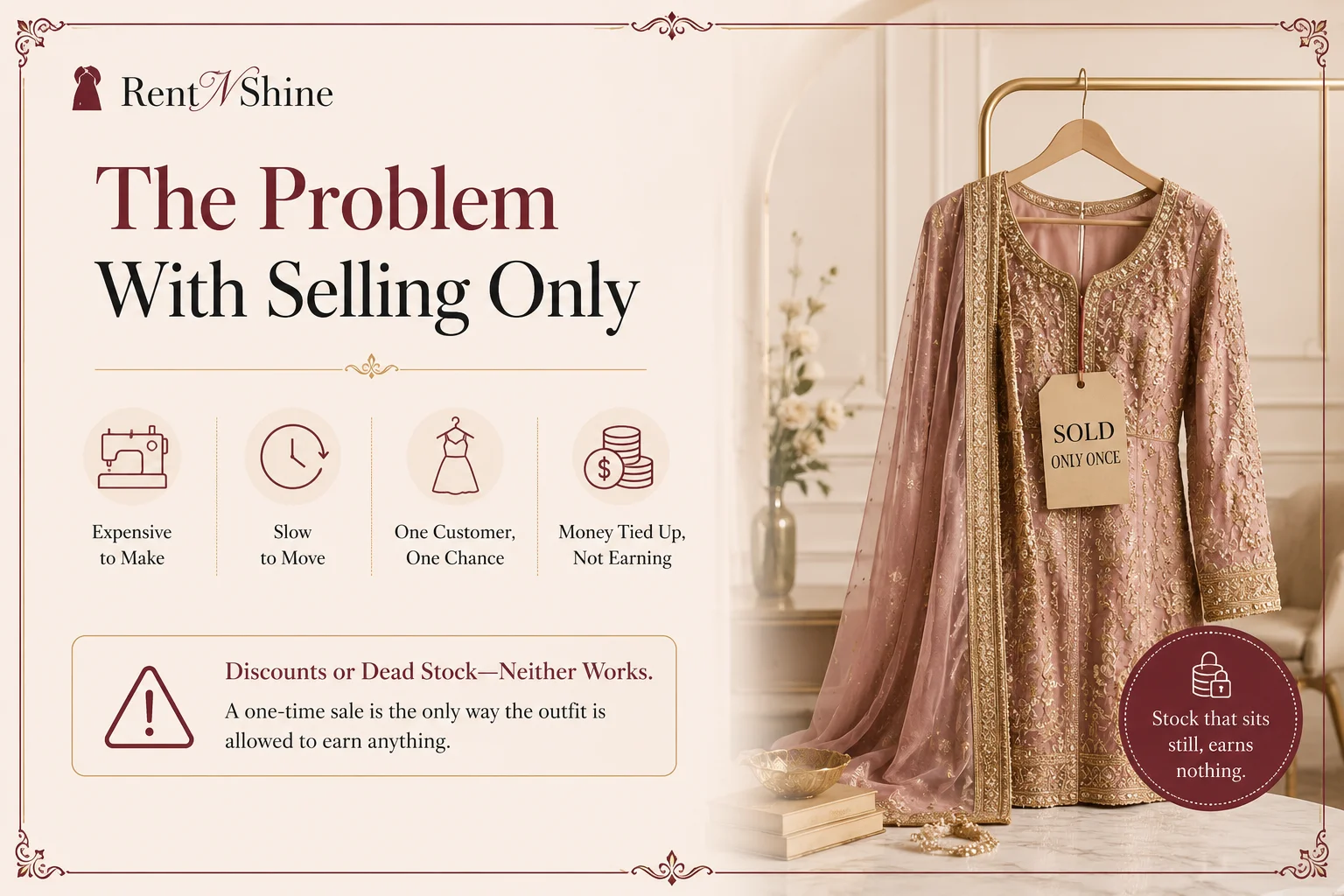
Here’s the part nobody puts in the pitch deck. Occasion wear is expensive to make and slow to move. A bridal or party outfit can take weeks of work and a serious amount of material, and then it needs exactly one customer who happens to want that size, that color, and that price, at that moment. Miss that window and the outfit just sits there, tying up money that could be doing something else.
Most sellers deal with this the same way: discount aggressively once a season passes, or hold onto stock and hope next year’s customer has similar taste. Neither actually solves the underlying issue, which is that a one-time sale is the only way the outfit is allowed to earn anything.
What a Rent-and-Sale Model Actually Means
The idea is simple enough. Instead of listing an outfit for sale only, you list it for both rent and sale at the same time. A customer who wants to own the piece can still buy it. A customer who just needs it for one event, and doesn’t want to spend that much on something they’ll wear once, can rent it instead. Same outfit, same listing, two different kinds of buyers.
For a seller, this isn’t a totally different business. It’s the same stock working harder. An outfit that might have sold once now has a chance to be rented several times before it ever sells, or it might sell straight away to someone who was never going to rent in the first place. Either way, you’ve widened who your outfit can actually reach.
The Real Business Advantages
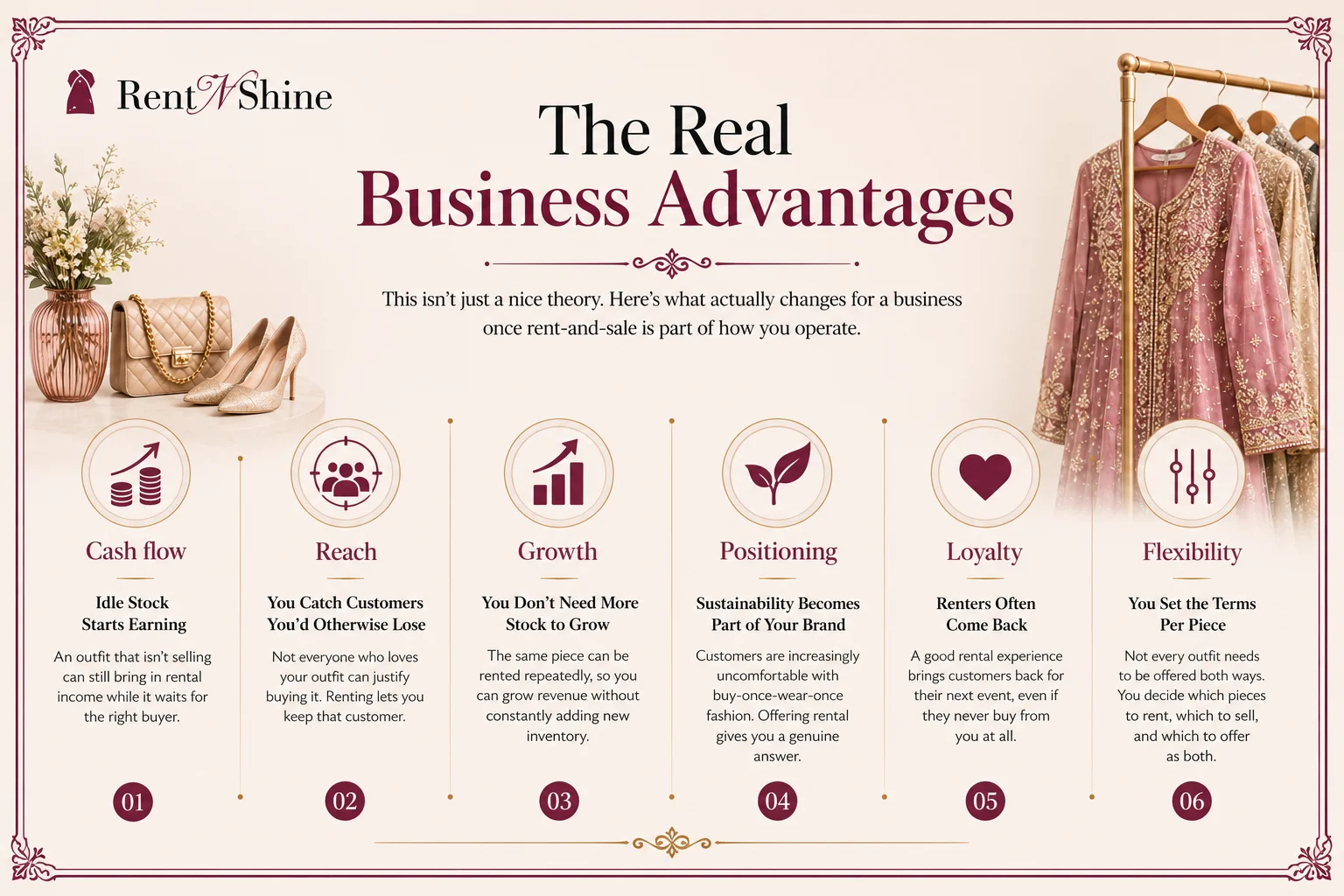
This isn’t just a nice theory. Here’s what actually changes for a business once rent-and-sale is part of how you operate.
Idle Stock Starts Earning
An outfit that isn’t selling can still bring in rental income while it waits for the right buyer, instead of sitting there as dead weight on your books.
You Catch Customers You’d Otherwise Lose
Not everyone who loves your outfit can justify buying it. Renting lets you keep that customer instead of losing them to a cheaper, lower quality alternative.
You Don’t Need More Stock to Grow
Because the same piece can be rented repeatedly, you can grow revenue without constantly producing or buying new inventory just to keep up.
Sustainability Becomes Part of Your Brand
Customers are increasingly uncomfortable with buy-once-wear-once fashion. Offering rental gives you a genuine answer to that, not just a marketing line.
Renters Often Come Back
A good rental experience brings customers back for their next event, even if they never buy from you at all. That repeat relationship is worth more than a single sale.
You Set the Terms Per Piece
Not every outfit needs to be offered both ways. You decide which pieces make sense to rent, which to sell only, and which to offer as both.
Selling Only vs Rent-and-Sale
It helps to see the difference side by side, because the shift is smaller than it sounds but the effect on revenue is not.
The outfit earns once. If it doesn’t sell quickly, it sits unsold, loses relevance as trends move on, and eventually gets marked down just to clear space.
The outfit can earn repeatedly through rentals while still being available to sell whenever the right buyer shows up. Nothing about selling it later is lost.
Why Trust Decides Everything
Renters Need to Trust the Fit and Condition
Since a renter can’t try the outfit on beforehand, accurate measurements, honest photos, and clear condition notes matter far more than they would in a normal sale.
Owners Need to Trust What Comes Back
If you’re the one lending the outfit, you need confidence that it’ll be returned on time and in the same condition it left in. Clear terms upfront prevent most disputes before they start.
Both Sides Need a Way to Resolve Problems
Something will eventually go wrong, a late return, a stain, a mismatched expectation. Having an actual process to handle it is what keeps people coming back instead of leaving a bad review and never returning.
Getting It Right From Day One
Start with your slower-moving pieces
Test rent-and-sale on outfits that haven’t been selling well rather than your newest arrivals, so you learn the process on stock that was earning nothing anyway.
Treating rental terms as an afterthought
Vague policies on damage, late returns, or cancellations cause more disputes than almost anything else. Write them clearly before your first rental goes out.
Reading the Wedding Season Calendar
Demand for occasion wear in Pakistan follows the wedding calendar closely, and planning your rent-and-sale mix around it makes a real difference to how well it performs.
Stock up your rental listings ahead of September and January, since that’s when browsing activity picks up well before bookings actually come in.
Frequently Asked Questions
Is a rent-and-sale model actually profitable for a small fashion business?
Do I need to choose between renting and selling my stock?
How do I protect my inventory when renting it out?
Will renting my outfits hurt their resale value later?
What kind of outfits work best for rent-and-sale?
Your stock doesn’t have to choose between earning once or earning nothing. Give it a way to do both, and let it work for you long after the first sale would have ended.
Put Your Stock to Work
List your outfits for rent and sale on RentNShine and start earning from pieces that would otherwise just sit on the rack.
Start Listing on RentNShine"Sustainability in fashion isn't a trend; it's a responsibility. Every rented lehenga tells a story of a thousand celebrations."